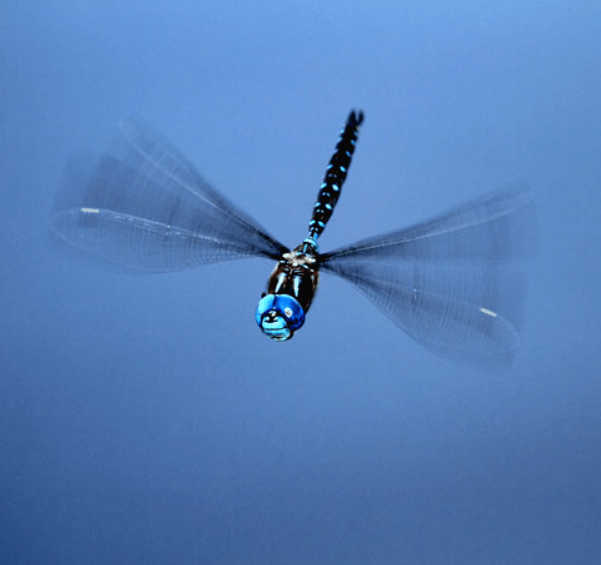
In the summer in Tarrytown the dragonflies appear overnight. They can be seen in the afternoon in well lit alcoves along the lakes edge perched on branches that jut out of the water, and flitting about defending their little outpost from any interlopers.
The Blue Dasher species with their shimmering electric blue coloration is especially mesmerizing. Their coordination and aerial prowess are really something. Why do dragonflies never accidentally hit into you, when flies, bees and all manner of flying insect can’t seem to help themselves?
Their pose is reminiscent of a helicopter’s, head down, tail up and a tendency to swerve from side to side.
Occasionally, their hover will be interrupted and they will zip about in a seemingly random direction for a second, only to return to their original position. They will frequently harry any flying insect, dragonfly or other which enters their vicinity. At first glance, this can appear to be a predation move, if the insect is something small like a mayfly, but after watching for a few seconds, it becomes clear the little fly gets away without a scratch.
Dragonfly skirmishes are a real spectacle, a dog fight in miniature. Sometimes the Blue Dasher will spar with dragonflies of the same species, a duel in electric blue faster than the eye can track. Other times, their most frequent sparring partner appear to be the fiery red Eastern Amberwing, a worthy opponent. After the interloper is warded off, the Blue Dasher will return to its perch to regain its strength and soak up more sunlight.
This perch defense behavior appears to be an elaborate mating ritual of sorts. The Blue Dashers eck out its a little alcove, wooing a mate, zipping about, discomfiting any rival that wanders there.
Dragonflies have a head that is something like 80% compound eye, wrapped around nearly their whole head. This gives them excellent vision: They can see in nearly 360 degrees at a very high ‘refresh’ rate with something akin to binocular vision.
Dragonflies have very high success rates when hunting, but I’ve never seen a Blue Dasher catching anything or even hunting something. The closest behavior I can think of which might fit this, is when I’ve seen larger dragonflies seemingly hunting in fields (I can’t think of any other reason they would be here, and they tend to be at the same heights as swallows who also appear to be hunting).
Amazingly, they do have predators, despite their speed and agility. One such is the cunning Cat Bird. The Cat Bird will perch on the branch of a dead tree near where dragonflies are frolicking, pick out a target and then make a quick 1-2 feet dash to try and catch them. It’s hard to tell exactly what their trick is, but they seem to have some strategy other than brute force and speed which the dragonflies are susceptible to.
Another predator of dragonflies is yellow jackets and wasps who somehow manage to restrain and butcher them despite their larger size.
One mystery of dragonflies: have they been under the pressure of natural selection recently, or are their adaptations more static in nature. Are they just a ‘perfect’ organism for their niche, with no further improvements needed so long as the environment stays more or less the same?
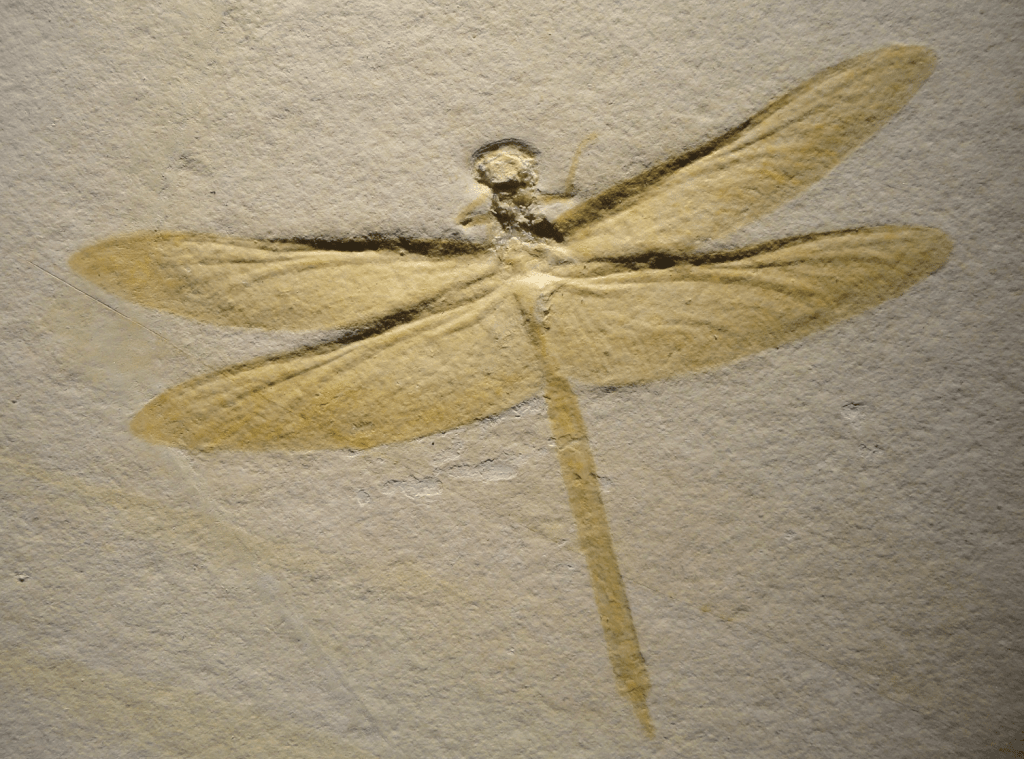
A remarkable thing about the Blue Dasher is that it only lives for the season. As summer ends you see fewer and fewer of them as they die off going into the Fall. They disappear slowly, and then all at once, with a few of their larger cousins hanging in longer, but eventually succumbing, leaving the little alcoves a little less frenetic in preparation for winter.

 I know but what is it?