A tale of three centuries
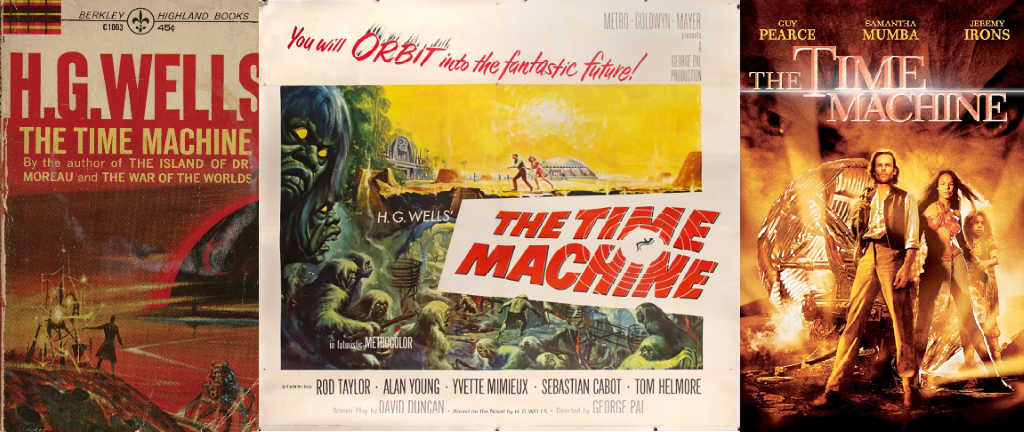
H.G Wells’s “The Time Machine” contains some incredible digressions.
1895:
“Seeing the ease and security in which these people were living, I felt that this close resemblance of the sexes was after all what one would expect; for the strength of a man and the softness of a woman, the institution of the family, and the differentiation of the occupations are mere militant necessities of an age of physical force. Where population is balanced and abundant, much child-bearing becomes evil rather than a blessing to the State; where violence comes but rarely and offspring are secure, there is less necessity – indeed there is no necessity – for an efficient family, and the specialization of the sexes”
Here he’s speaking of the Eloi, the physically diminutive and mentally naive surface dwellers who are descendants of humanity. The Eloi sexes are harder to differentiate than modern persons. It’s a fun trend to explore, we see this lack of differentiation at least in professional ‘white collar’ occupation where the gender gap has become smaller over time.
“So, in the end, above ground you must have the Haves, pursuing pleasure and comfort and beauty, and below ground the Have-notes, the workers getting continually adapted to the conditions of their labor”
Wells had an interest in socialism and you can see some Marxian influence here. The premise of the Eloi and Murlock divide was basically that the rich became richer and lived in refinement where as the murlocks struggled living miserable lives. The tables turn in this future though because the ‘aristocracy’ have become so adapted to gentle conditions that they have wholly lost their fear and ability to fight. A bit like the dodo bird who with no natural predators had no fear of man and was hunted to extinction in a decade because of it. The Murlocks on the other hand have maintained their cunning and ferocity, being on the razor edge of evolution and struggle (they actually eat the Eloi).
The events of the time machine are in the far-flung future but it’s fun to think about this prediction or scenario in the 125 years since it was written. As it happens humanity is more or less enjoying a golden age now. Compared to the blustery war years or the social upheavals of the industrial revolution era things are pretty peachy now. This begs the question: Are we going down the Eloi path as a civilization? Has prosperity lead to a lethargic generation of do-nothing good timers?
I would argue, No, that it hasn’t: The decade is near closing (December 2019 as I write this) and thinking back on just the last decade I see a wave of technical advancements and changes. Mobile computing stands out in my mind as just one example: In 2009 I didn’t use my phone to stream the music I was listening to, hail an uber, board a plane and order food. There’s a lot of efficiency gains there. Just taking the plane example: Before the internet age, you had to go into the airport, see the check-in desk to get checked in and print out your boarding pass, find a directory to navigate the airport and so forth. Afterwards, you could be checked in and know your seat number while still in your pajamas in bed!
“The too perfect security of the upper-worlders had led them to a slow movement of degeneration, to a general dwindling in size, strength and intelligence”
“Nature never appeals to intelligence until habit and instinct are useless. There is no intelligence where there is no change and no need of change”
(Interesting theory on the origin of intelligence.)
1960:
The 1960 film adaptation of the book is also a masterpiece. It keeps very close to the source material with a couple fun riffs thrown in here and there, for example: when the time traveler first jumps into the future, he finds himself in the midst of some kind of nuclear attack. The populace is fleeing into underground bunkers or safe houses and the air raid sirens are blaring.
The great fears of the post war world come true and the world is blown to smithereens in some apocalyptic “The Day after Tomorrow” style ending. It’s indicated that the Morlocks develop from those folks who took safety underground and presumably lived out the destruction above for a few generations to become the phantasmal Morlocks .
2002
This adaptation takes the most liberties with the source material but I think it’s my favorite. Guy Pearce plays the time traveler. There’s a beautiful tragic love story to kick things off where the time traveler’s fiancé is shot in Central park by a robber attempting to steal their engagement ring.
The time traveler attempts to fix this by going back in time and taking the fiancé through another segment of the park or avoiding the park all together. Regardless of what he does she dies. This spurs him on his quest to find out why he can’t change the past, he thinks that they would certainly know the answer to this question in the far-flung future…
The Eloi of this future are neither diminutive like the novel nor simpering like the 1960 film. Here we have a mulatto race of future hunter gatherers. This bit was probably influenced in part by the expectation that the skin color differences that we have today will eventually average out yielding up a face like this:

Wells would probably appreciate this expansion of the source material, his own contemporaries had just uncovered The law of regression to the mean a few years prior (Sir Francis Galton). Galton even gave a widely publicized demonstration at the legendary Royal Society on the topic.
The 2002 version has its own insights on the future. Or at a minimum a glimpse into the odd manias and obsessions of the double aughts:
In future New York, people ride around on bicycles presumably because the world’s oil supply has been depleted and cars are no longer economical.
The future is struck not by war but by environmental disaster. The time traveler spends a few eons in a frozen waste engulfed in some glacier. (This brings to mind the Laurentide ice sheet which buried New York and most of New England under a mile-thick sheet of ice, tens of thousands of years ago.)
The film shows the influence of computers and is the first adaptation where they play a central role in the plot:
The Eloi speak of a ghost hidden in a cavern who turns out to be the AI of the long lost New York Public Library. The idea of AI as an enduring memory of humanity is briefly explored here.

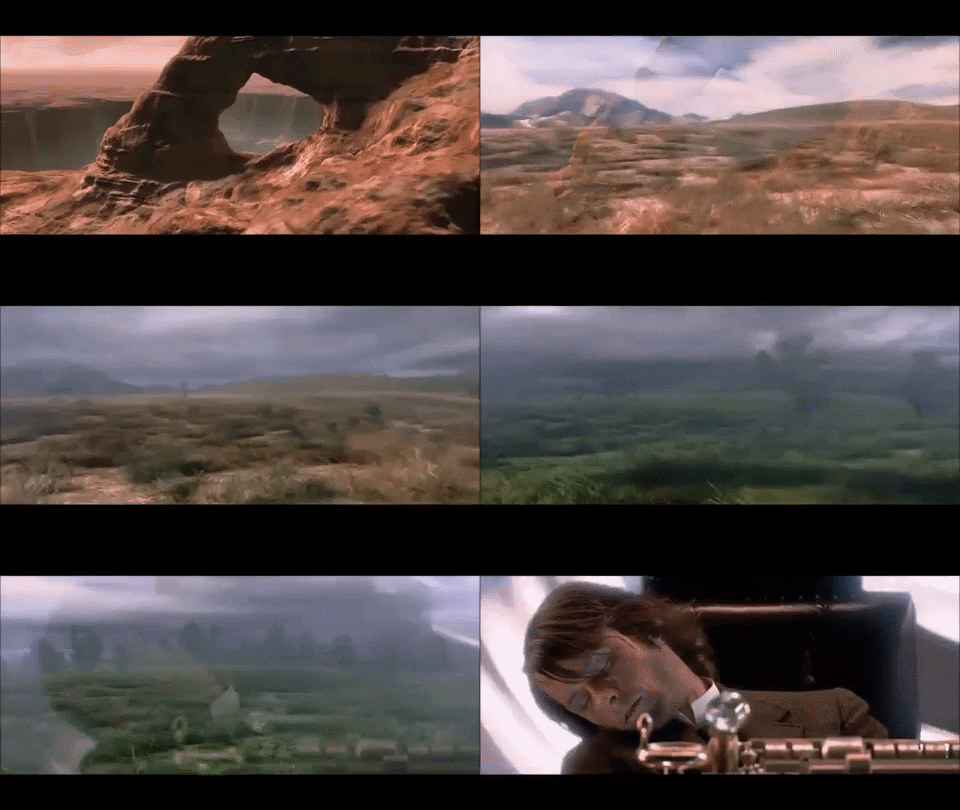
Also striking are the CGI sequences: breathtaking in scope and a gentle tease of the kinds of things that machines can now do!

 I know but what is it?